
Choosing the right Custom Table Legs can change a table’s stability, comfort, and visual character. A thick oak top may need stronger support than a narrow writing desk. A compact apartment table may require slimmer legs and better floor clearance. Small measurements matter.
In this guide, we will examine height, load capacity, materials, mounting plates, finishes, and floor protection. Metal legs often suit industrial or modern interiors, while solid wood legs create warmer, traditional detail. Adjustable feet can reduce wobbling on uneven floors. Rubber pads also help protect hardwood and tile. Practical choices usually begin with the tabletop, not the leg style.
I once selected attractive steel legs for a heavy dining top, but the mounting plate was too small. The table felt secure at first, then shifted during use. That mistake showed me why appearance cannot replace engineering. Experienced fabricators check weight distribution, screw length, joint strength, and the table’s intended use. Reliable suppliers should provide clear dimensions, material details, finish information, and installation guidance.
Measure twice.
The recommendations ahead are designed for real projects, from a simple console to a large conference table. They also acknowledge an uncomfortable truth: the perfect leg does not exist for every design. Budget, shipping limits, tools, and installation skill can change the best answer. Careful comparison helps you choose Custom Table Legs that look right and perform safely over time.
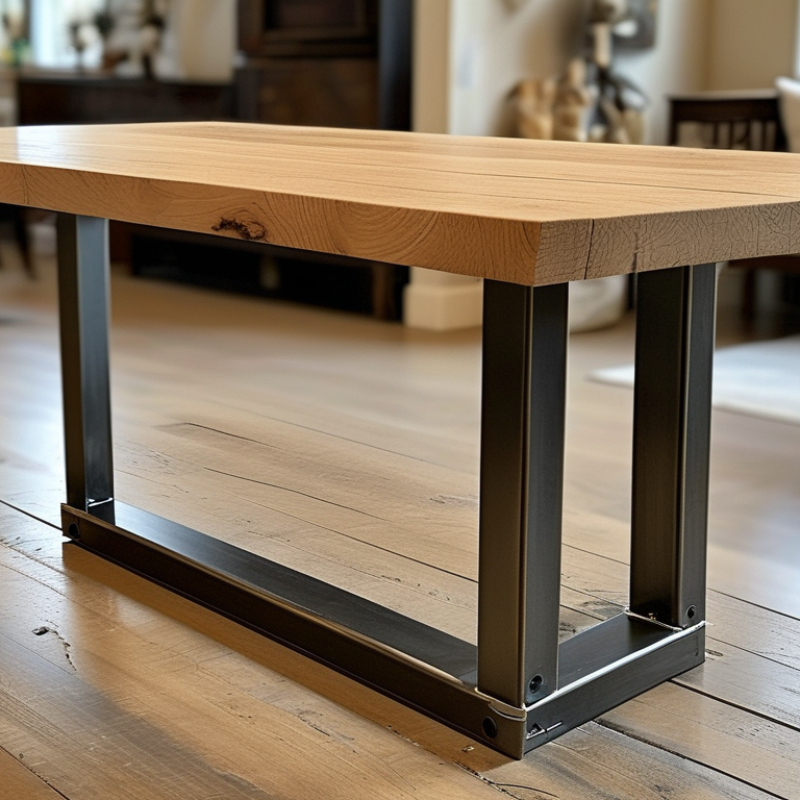
Choosing custom table legs starts with the table’s purpose, not its appearance. A dining table faces repeated pushing, leaning, and daily spills. A workbench needs stronger bracing and higher load resistance. A console table may carry less weight, but its narrow footprint increases tipping risk.
The 2024 U.S. Access Board standards place accessible work surfaces between 28 and 34 inches high. That range offers a useful planning reference, even for residential projects.
Measure the tabletop, then estimate its total working load. Include the top, equipment, dishes, books, and occasional leaning. A 60-inch wooden top carrying a monitor and tools needs more support than a small side table. BIFMA’s X5.5 desk-product standard evaluates stability, strength, and durability. It reminds designers that leg selection is not purely decorative. Mounting plates, fasteners, floor contact, and frame stiffness matter equally. Four thin legs can look elegant. They may still flex.
Check the leg height after adding the tabletop thickness. A 30-inch finished table with a 1.5-inch top needs approximately 28.5-inch legs. Leave room for knees and movement. For a heavy top, wider mounting plates and cross-bracing usually improve confidence. Do not trust appearance alone. I have seen rigid steel legs wobble because the screws entered weak timber. That mistake is easy to miss. Recheck the floor, joint alignment, and real-world load before ordering. Small inaccuracies become obvious when someone writes, eats, or leans at the table.

Material choice determines how a table performs, not just how it looks.
Steel legs suit heavy stone or hardwood tops because they resist bending under concentrated weight. For a 180-centimeter dining table, a thick steel frame can reduce movement during daily use. Aluminum feels lighter and resists rust, but it may flex more under heavy loads. Hardwood legs add warmth and visual softness. They need careful sealing, especially near kitchens, windows, or damp rooms.
Consider the room before choosing the finish. Stainless steel works well where spills and frequent cleaning are common. Powder-coated metal offers many colors, but damaged areas can still expose the surface to moisture. Check the welds, mounting plates, and screw holes closely. These small details often matter more than the leg’s shape. Adjustable feet help on uneven floors, while rubber pads reduce scratches and unwanted movement. Keep the weight of the tabletop in mind.
I once selected slim legs for a thick oak top, and the proportions looked elegant but felt unstable. That mistake taught me to test scale, not trust a drawing. A useful test is applying firm pressure from several directions before final installation. Also, leave enough clearance for knees and chairs. The strongest material can still create a poor table when its geometry is wrong. Inspect the finish, fasteners, and floor contact points after assembly, because durability begins with these overlooked details.
Table legs should support the tabletop’s function, not only its appearance. Start with the finished height. For a dining table, 28 to 30 inches usually feels natural. The National Kitchen & Bath Association recommends about 36 inches for counter height and 42 inches for bar height. Subtract the tabletop thickness and mounting plate height before ordering legs. A 30-inch leg may create a table that feels too tall.
Shape changes the table’s visual weight. Slim steel legs suit a light, narrow top. Wide wooden legs look more balanced beneath thick oak or stone. A 2024 Houzz U.S. Kitchen Trends Study reported that 64% of upgraded kitchens included an island, showing how often homeowners need practical, elevated surfaces.
For island-style tables, leave enough knee clearance beneath the overhang. Around 12 inches often works, but stools and user height can change the result.
I once selected tapered legs for a heavy tabletop. The proportions looked elegant, yet the table felt slightly unstable during side pressure. That mistake taught me to check the leg’s load rating and mounting spread.
BIFMA ergonomic guidance also encourages fitting work surfaces to the user, rather than forcing every project into one standard height.
Measure twice. Test with cardboard blocks first.
Symmetry is not always comfort. A small tabletop may need a wider stance, while a long top may require a center support to prevent flexing.
Custom table legs should match the mounting method, not only the table’s appearance. I usually inspect the tabletop thickness, underside structure, and expected load before selecting a leg design. Flat mounting plates work well on sturdy wood surfaces. Threaded inserts offer cleaner removal and better repeatability. For heavy stone or unusually wide tops, a reinforced frame may distribute weight more safely.
Stability depends on more than leg material. Check the leg height, contact angle, and distance from each corner. A small adjustment can stop annoying rocking. Adjustable feet help on uneven floors, especially in older rooms. Test the assembled table with gradual pressure before adding equipment or decorations. Do not rely on appearance alone. A sleek leg can still flex under a concentrated load.
Installation details often decide whether the project succeeds. Mark every hole carefully, then drill pilot holes suited to the fastener size. Keep screws short enough to avoid piercing the tabletop. Use a level, but also measure diagonally because a square-looking frame may still twist. I have sometimes trusted pre-marked positions too much, and that caused a frustrating second installation. Recheck the measurements. If the tabletop is heavy, ask another person to support it during assembly. Fasteners should be tightened firmly, not aggressively, since over-tightening can crush wood fibers or damage inserts.
Compare Custom Finishes, Costs, and Long-Term Maintenance
Custom legs should be evaluated as a lifecycle purchase, not a visual accessory. Steel, aluminum, and hardwood behave differently under moisture, impact, and daily cleaning. The USDA Forest Products Laboratory’s Wood Handbook explains that wood expands and contracts as moisture changes. This matters for long dining tables and heated rooms. Powder-coated metal usually resists chips better than ordinary paint. However, repairs may look less seamless. Oil-finished wood offers tactile warmth and local touch-ups. It also needs periodic re-oiling. I have seen beautiful legs age badly when the finish suited photographs, not real use.
Cost comparisons should include fabrication, shipping, installation, and future refinishing. Request identical dimensions and finish levels from each supplier. Then compare five-year costs, not only the invoice. U.S. Bureau of Labor Statistics Producer Price Index data show that furniture material prices can change over time. Add a 10–15% contingency for custom work. It is practical, but not universal. For indoor projects, request finish emissions data. The U.S. Environmental Protection Agency reports indoor pollutant levels are often two to five times higher than outdoor levels.
Tips: